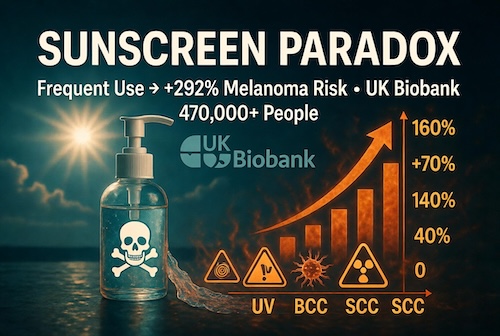
Interesting study out of the UK. Remember, we’re not medical advisors but we do like to stop and question the norm from time to time.
A large-scale analysis of over 470,000 participants from the UK Biobank has delivered alarming findings that challenge decades of public health messaging on sunscreen. People who reported using sunscreen more frequently faced significantly elevated risks of invasive melanoma, basal cell carcinoma (BCC), and squamous cell carcinoma (SCC) — even after researchers rigorously adjusted for key confounding factors including age, sex, skin type, tanning ability, sunburn history, sunlamp use, and time spent outdoors.
Key Findings
- Invasive melanoma: +292% higher risk (relative risk ≈ 3.92)
- Basal cell carcinoma: +140% higher risk (relative risk ≈ 2.40)
- Squamous cell carcinoma: +126% higher risk (relative risk ≈ 2.26)
A clear dose-response relationship emerged: the more frequently participants reported using sunscreen, the higher their observed skin cancer risk. These signals persisted despite statistical controls for multiple variables that typically influence skin cancer outcomes.This observational study does not prove direct causation, but the strength of the association — after extensive adjustments — raises serious questions about the net safety and effectiveness of widespread chemical sunscreen use.
The “Sunscreen Paradox” Explained
Why would sunscreen users show higher cancer rates? Several plausible mechanisms stand out:
- Toxic Chemical Ingredients: Many conventional sunscreens contain compounds like oxybenzone, octocrylene, homosalate, and others that are rapidly absorbed through the skin into the bloodstream. These act as hormone disruptors and have raised safety concerns from regulators. Some formulations have even been found contaminated with benzene, a known human carcinogen.
- Blocking Vitamin D Production: Sunscreen blocks UVB rays, which are essential for the body’s natural production of vitamin D. Vitamin D plays critical roles in immune function, cellular repair, inflammation control, and cancer defense. Chronic deficiency linked to heavy sunscreen reliance may undermine one of the body’s primary protections against malignancies.
- Behavioral “Permission Slip” Effect: Users often apply sunscreen as a false sense of security, leading to prolonged sun exposure without adequate reapplication or complementary protection (clothing, shade). Inadequate coverage or failure to reapply every two hours can leave skin vulnerable while still blocking beneficial rays.
These patterns align with what researchers have termed the “sunscreen paradox” — increased sunscreen adoption coinciding with rising skin cancer rates in many populations.
Why This Matters Now
Skin cancer rates continue climbing despite aggressive sunscreen promotion campaigns. While sunburns are undeniably harmful and should be avoided, the blanket advice to “slather on sunscreen daily” — often with chemical formulations — may carry unintended consequences. The UK Biobank data adds to a growing body of evidence suggesting that not all sun protection strategies are equal.Chemical sunscreens differ markedly from physical (mineral) barriers like zinc oxide or titanium dioxide, which sit on the skin’s surface rather than being absorbed systemically.
Sensible Sun Exposure: A Better Approach
The findings do not advocate reckless sunbathing or ignoring UV risks. Instead, they support a more nuanced strategy:
- Prioritize sensible, non-burning exposure — Build a gradual “solar callus” through regular, moderate sun time (especially morning or late afternoon) to support vitamin D levels without damage.
- Use physical protection first: Wide-brimmed hats, UPF clothing, shade, and timing outdoor activities wisely.
- If sunscreen is needed for prolonged midday exposure, opt for mineral-based (zinc/titanium) formulations over heavily absorbed chemical versions.
- Monitor vitamin D status through blood testing and consider supplementation if levels are low, especially for those with limited sun access.
Bottom Line
The UK Biobank analysis of nearly half a million people reveals a striking association: more frequent sunscreen use correlates with substantially higher risks of the three major skin cancers, even after accounting for sun exposure and other risk factors. Combined with concerns over absorbed toxins and suppressed vitamin D, this challenges the simplistic “sunscreen is always safe and effective” narrative.Sunlight is not the enemy — it is a fundamental driver of human health. The key lies in respecting it through balanced, informed practices rather than relying on products that may introduce new risks while blocking natural benefits.This study serves as a powerful reminder to question conventional wisdom, read ingredient labels, and prioritize whole-body health over convenience. More independent research is warranted, but the signals from this massive dataset cannot be ignored.
Supporting reference: Analysis of UK Biobank data on sunscreen use and skin cancer incidence (as summarized in recent reports drawing from large cohort findings, including gene-environment studies in Cancer Epidemiology, Biomarkers & Prevention).
Stay informed. Question everything. Protect your health wisely.
